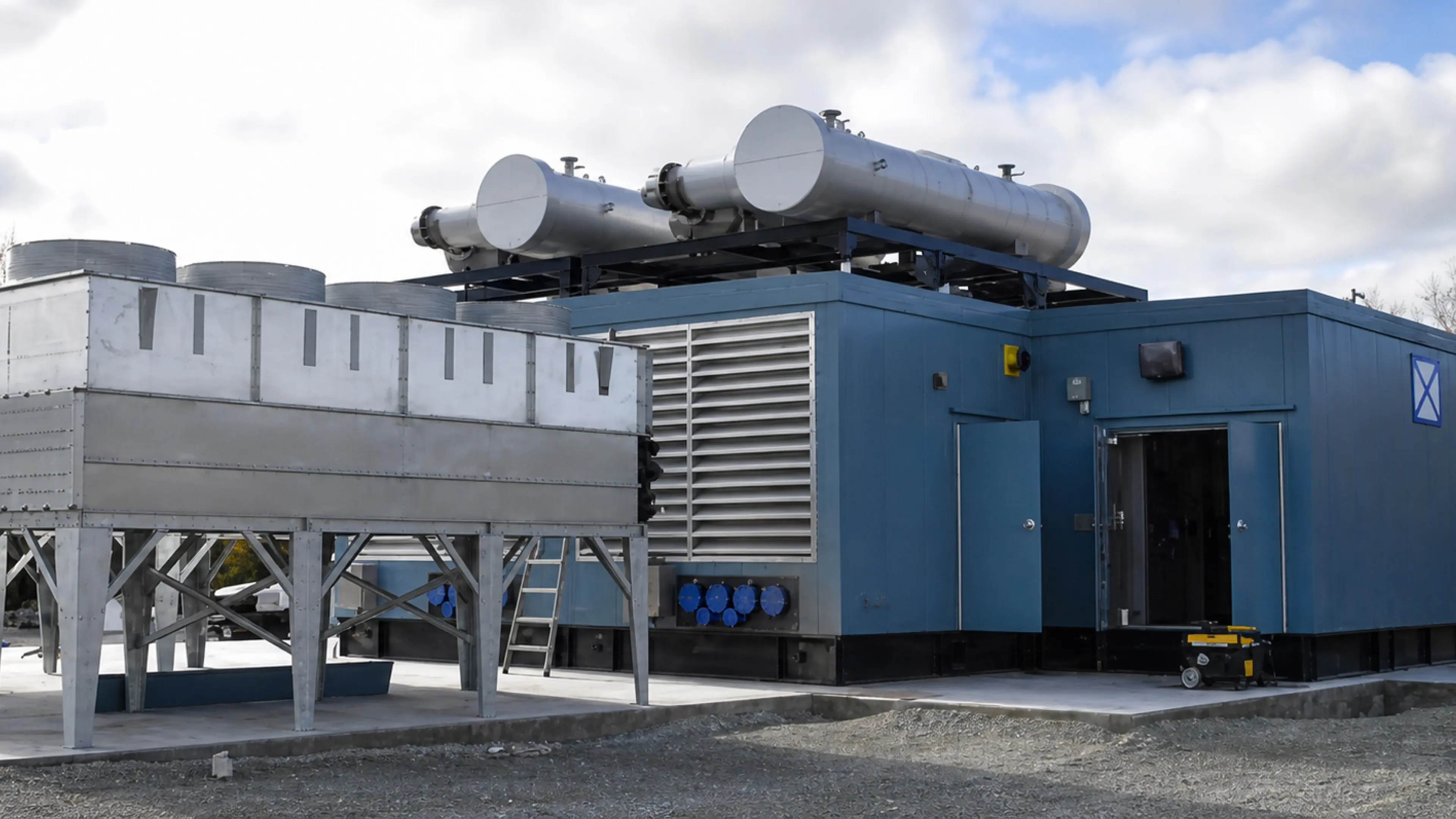
2.2 MW of cogeneration so a gold mine could keep expanding.
The problem we were solving
Kirkland Lake Gold planned to expand its Taylor Mine but did not have the electrical capacity to supply the additional power needed.
The mine, one of the largest in Canada, sits just south of Timmins and is connected to Hydro One Networks at 27.6 kV via the Ramore Transformer Station. Expansion required more power than that connection could deliver.
Partnering with CEM Projects and Stolk Construction, Kirkland Lake Gold implemented two cogeneration units, each capable of producing 1.1 MWe of electricity, with waste heat used to heat the mine and its workers. Both units can electrically island from the grid, so a power failure no longer means lost production.
Key Project Components
What the project involved.
Two 1.1 MWe GE Waukesha 7044 engines.
Dual fuel engines: initially operating on propane, convertible to natural gas in future.
Both cogeneration units able to electrically island from the grid.
Waste heat recovery used to heat the mine and its workers.
Coordination with Hydro One Networks at the 27.6 kV Ramore Transformer Station connection.
Sub-contractor coordination across an isolated northern site.
Support for grant funding under the Save on Energy / Process and Systems Upgrade Initiative.
Challenges & Solutions
Building power in Ontario’s north.
The mine’s isolation in northern Ontario makes project scheduling and equipment delivery a real risk. Joint effort between CEM and Stolk kept sub-contractors working efficiently and the project finished on time.
With the units able to island from the grid, Kirkland Lake Gold no longer worries about power failure and production loss, and can continue expanding the operation.
Dual fuel engines start on propane but can convert to natural gas later, protecting the investment against a change in fuel supply.
Key Takeaways
What this project proved.
Cogeneration can unlock an expansion that the existing utility connection cannot support.
Islanding capability turns power reliability from a risk into a non-issue.
Remote northern projects live or die on scheduling and equipment logistics.
Power that lets an operation grow.
This project shows Stolk delivering cogeneration capacity at one of Canada’s largest gold mines, in a remote location where logistics decide the schedule.
With the help of its partners, Kirkland Lake Gold also secured a Save on Energy grant projected to be worth just over $2 million.